
World Cup 2026 Betting FAQ: 25 Questions Answered with Data
 Available in US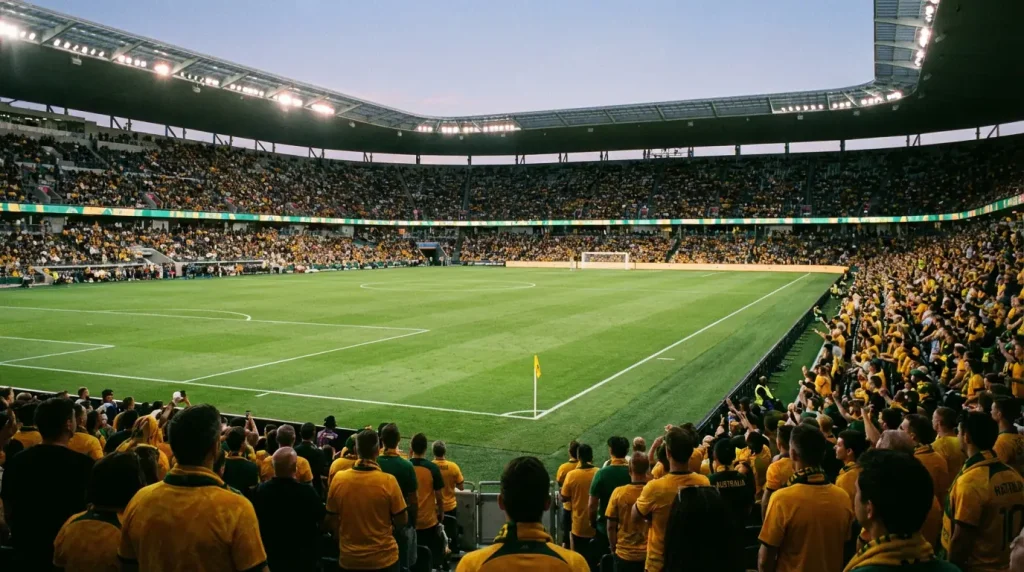
Table of Contents
A mate rang me last week asking whether he could still use his credit card at Sportsbet. Another wanted to know if he’d need to wake at 3am to watch the Socceroos. After nine years answering variations of these questions — often at barbecues where I’d rather be drinking — I compiled the 25 most common World Cup betting queries into one reference. Every answer contains at least one hard number, because vague generalities don’t help anyone make informed decisions. The 2026 FIFA World Cup runs from 11 June to 19 July across 16 stadiums in three countries, featuring 48 teams in 104 matches.
Legal and Regulatory Questions
The Interactive Gambling Act 2001 sits on my desk — well, a printed summary does — and I reference it more often than you’d think. Australians have some of the highest gambling participation rates globally, with losses totalling A$31.5 billion in the 2022-23 financial year. That activity naturally generates regulatory questions.
What are the current restrictions on online World Cup betting in Australia?
Online sports betting through licensed Australian operators remains legal for anyone aged 18 or older. The key restriction is the prohibition on in-play internet betting — you cannot place live bets online during matches. Phone betting for live wagers remains legal. Since June 2024, operators cannot accept credit cards or cryptocurrency for deposits. The ACMA enforces these rules and has blocked over 800 illegal offshore gambling websites since 2017.
How does BetStop affect my World Cup betting?
BetStop is Australia’s National Self-Exclusion Register, operational since August 2023. Registration takes about 10 minutes online and excludes you from all licensed Australian wagering operators for 3 months, 12 months, or permanently. Approximately 26,000 Australians registered in the first six months. Self-exclusion is comprehensive: you can’t switch bookmakers to circumvent it.
What advertising restrictions apply during the World Cup?
New restrictions passed in April 2026 take effect from 1 January 2027 — meaning they won’t apply during this World Cup. Existing rules permit betting advertisements during live broadcasts with responsible gambling messaging. Inducements like “deposit $50, get $50 free” cannot be advertised to non-account holders. Television broadcasts will feature similar betting ad density to AFL and NRL coverage.
Can I bet from different Australian states?
Yes, with no practical variation. Sports betting licenses are issued at state level — the Northern Territory issues most online licenses — but licensed operators accept customers nationwide. Whether you’re in Perth, Darwin, or Sydney, you access the same markets at the same odds. If travelling overseas during the tournament, many operators geo-block access from certain countries.
What’s the minimum age and how is it enforced?
The minimum age is 18 across all Australian jurisdictions. Operators verify age using driver’s license or passport details cross-referenced against government databases. In 2023, operators rejected approximately 45,000 account applications due to failed age verification. Providing false details carries potential criminal penalties under state and territory legislation.
Understanding Odds and Markets
I once spent 20 minutes at a cricket match explaining implied probability to someone who kept asking why favourites don’t always win. The confusion usually stems from not understanding what odds actually represent — a bookmaker’s assessment of probability adjusted for margin.
Why do Australian bookmakers use decimal odds?
Decimal odds simplify payout calculations: multiply your stake by the odds to get total return including stake. If Australia is priced at 3.50 and you bet A$100, you receive A$350 if they win — A$250 profit plus your original A$100. Fractional odds require additional mental arithmetic. Comparing 3.50 versus 3.40 immediately shows a 10-point difference, whereas comparing 5/2 to 12/5 requires conversion.
How do I calculate implied probability from decimal odds?
Divide 1 by the decimal odds and multiply by 100 to get the percentage. At odds of 2.00, the implied probability is 50%. At 4.00, it’s 25%. Combined implied probabilities in a market always exceed 100% — that excess is the bookmaker’s margin. A market totalling 103% returns more to punters than one at 106%. For major World Cup matches, expect overrounds between 103% and 106%.
What does Asian handicap -0.25 actually mean?
Asian handicap -0.25 splits your stake equally between two handicaps: 0 and -0.5. If your team wins, both bets win. If the match draws, you win half and lose half. If your team loses, you lose everything. This “quarter ball” handicap eliminates completely dead bets while offering better odds than -0.5 alone. It suits matches where you fancy a team but want draw insurance.
Why do outright World Cup winner odds change dramatically?
Outright markets reflect cumulative probability across multiple matches, amplifying any reassessment. If a key player is injured, win probability for each remaining match drops — say, from 65% to 50%. Compounded across knockout rounds, this produces dramatic movements. During the 2022 World Cup, Morocco’s odds collapsed from 250.00 pre-tournament to around 10.00 by the quarter-finals.
What’s the difference between “to qualify” and “to win group” markets?
Group winner markets pay only if your team finishes first. Qualification markets pay if they advance by any means — first, second, or as one of 8 best third-placed teams. In 2026’s format, 40 of 48 teams advance (83.3%), making “to qualify” odds for competitive teams minimal value. A team priced at 1.05 to qualify implies 95.2% probability — minimal profit relative to risk.
Betting Strategy and Bankroll Questions
Strategy discussions get abstract quickly, so I’ve anchored these answers in practical scenarios. The 2026 World Cup runs 39 days — longer than any previous tournament — creating specific bankroll management challenges that differ from backing a single football match.
How should I size my bets across a 39-day tournament?
Allocate your total World Cup budget into units representing 1% each. A A$1,000 budget means A$10 units. Never exceed 3 units on any single bet. With 104 matches averaging 2.7 daily, opportunity to bet multiple times creates compounding risk. For the group stage — 48 matches across 12 days — retain at least 40% of bankroll for knockouts, where data availability increases.
Is backing favourites or underdogs more profitable at World Cups?
Historical data from five World Cups shows favourites winning approximately 48% of group-stage matches while priced to win around 52% — negative expected value. Draws occurred in 23% of matches despite being priced around 20%, making them historically underpriced by 2-4%. I focus on identifying specific value rather than systematic favourite or underdog bias.
Should I use accumulator bets for the World Cup?
Accumulators mathematically favour bookmakers: combining independent events compounds the overround. A four-leg accumulator at fair 2.00 odds per leg should pay 16.00 but actually returns closer to 14.00 — approximately 12% value leakage. If using accumulators, limit to 2-3 legs maximum and never stake exceeding 0.5% of bankroll. Some bookmakers offer “bonus odds” adding 5-15% to payouts on winning multis.
What’s the optimal time to place World Cup bets?
Odds tend to stabilise by 48 hours pre-kickoff, with later movements driven by public money rather than sharp action. Betting at odds release — usually 7 days before group matches — captures better prices before public favouritism narrows favourites. For contrarian positions, waiting until 2-4 hours before kick-off often reveals inflated favourite prices due to recreational money flows.
How do I track my betting performance effectively?
Create spreadsheet columns for: date, match, market type, selection, odds at placement, stake, result, profit/loss, and running total. Calculate ROI (total profit divided by total staked) and strike rate. After 20+ bets, meaningful patterns emerge. Most punters discover they’re better at certain market types than others. Screenshot bet slips immediately — apps sometimes display different odds post-match.
Tournament Format and Schedule Questions
The 2026 World Cup represents the most significant format change since 1998’s expansion to 32 teams. Understanding structural changes matters because it directly affects betting considerations — more teams means different probability distributions across every stage of the competition.
How does the 48-team format change group-stage dynamics?
The 48 teams divide into 12 groups of 4. Top two from each group (24 teams) plus 8 best third-placed teams advance to a Round of 32. This 83.3% advancement rate compares to 50% previously. A team needs approximately 4 points to virtually guarantee progression as third-placed qualifier. Dead rubbers become rarer: even final matches matter for best third-place spots.
What times will matches kick off in Australia?
Most matches occur during Australian daytime and evening due to North American hosting. For AEST, this translates to: early morning from 2:00-5:00 (West Coast evening games), late morning from 5:00-8:00 (Mountain/Central games), and afternoon from 8:00-11:00 (East Coast games). Compared to 2022’s Qatar tournament with 11pm-3am kick-offs, 2026 is the most Australian-friendly schedule in decades.
How many knockout matches will there be?
The knockout phase comprises 56 matches: Round of 32 (16), Round of 16 (8), Quarter-finals (4), Semi-finals (2), Third-place playoff (1), and Final (1). Previously 31 knockout matches existed with 32 teams. This 80% increase means more opportunities for upsets. Historically, knockouts produce surprises at 25% rates — meaning one upset per four matches on average.
Which stadiums host the most matches and does altitude matter?
AT&T Stadium in Dallas hosts 9 matches — the tournament maximum. Altitude factors at Estadio Azteca (2,240 metres), hosting 5 group matches. At this altitude, balls travel approximately 5% further, players fatigue faster, and teams from lower altitudes historically underperform by 0.3-0.5 expected goals per match. All US and Canadian venues are effectively at sea level.
How does three-country hosting affect travel and performance?
Groups are geographically clustered to minimise travel. Group D plays entirely on the US West Coast — Vancouver, Seattle, Santa Clara. However, knockout rounds may require crossing 4 time zones. Historical data suggests teams travelling more than 2 time zones between knockout matches underperform expectations by approximately 8%. Track each team’s travel requirements post-group stage.
Socceroos-Specific Questions
Australian interest naturally centres on the Socceroos, and their Group D draw creates specific betting questions worth addressing individually. These five questions focus exclusively on Australia’s tournament participation, odds, and realistic expectations based on squad analysis and historical performance data.
What are the Socceroos’ realistic chances of advancing from Group D?
Group D contains USA (hosts), Paraguay, Australia, and Türkiye. The USA are clear favourites for first place at around 1.45 odds. Australia’s group qualification odds typically range from 1.70 to 1.90, implying 53-59% probability. With 8 of 12 third-placed teams advancing, Australia needs 3-4 points from three matches. One win and one draw against Paraguay and Türkiye should suffice.
When exactly do the Socceroos play?
Match one: Saturday 13 June versus Türkiye in Vancouver, 14:00 AEST — prime afternoon viewing. Match two: Saturday 20 June versus USA in Seattle, approximately 5:00 AEST — early but manageable. Match three: Friday 26 June versus Paraguay in Santa Clara, around 12:00 noon AEST — lunch viewing. SBS holds free-to-air rights for all 104 matches.
How does Australia’s World Cup history inform 2026 expectations?
Australia has qualified for 6 World Cups, advancing from the group stage twice — 2006 (Round of 16 exit to Italy) and 2022 (Round of 16 exit to Argentina). That 33% advancement rate suggests Australia competes rather than merely participates. Australia has never progressed beyond Round of 16. Betting markets pricing Australia around 150.00 to win reflect this ceiling accurately.
Which Socceroos players should I consider for player prop bets?
Australia’s primary striker typically scores 2-3 tournament goals when advancing. Central midfielders controlling possession register 3-4 shots on target across group stages. Australia typically relies on 4-3-3 or 4-2-3-1, meaning wide players rarely feature in goalscoring. Australia’s historical pattern shows defenders scoring from corners in approximately 18% of World Cup goals — higher than global averages.
What Socceroos-specific bets offer the best value?
Three markets warrant consideration. First: Australia to beat Paraguay (around 2.00-2.20) — Paraguay hasn’t competed since 2010 and faces acclimatisation challenges. Second: Under 2.5 goals in Australia versus Türkiye (approximately 1.80) suits defensive organisations and first-match caution. Third: Australia to qualify from Group D at odds above 1.80 offers value given third-place advancement pathways.
