
Group I Data: France, Senegal, Norway, Iraq — Odds and Analysis
 Available in US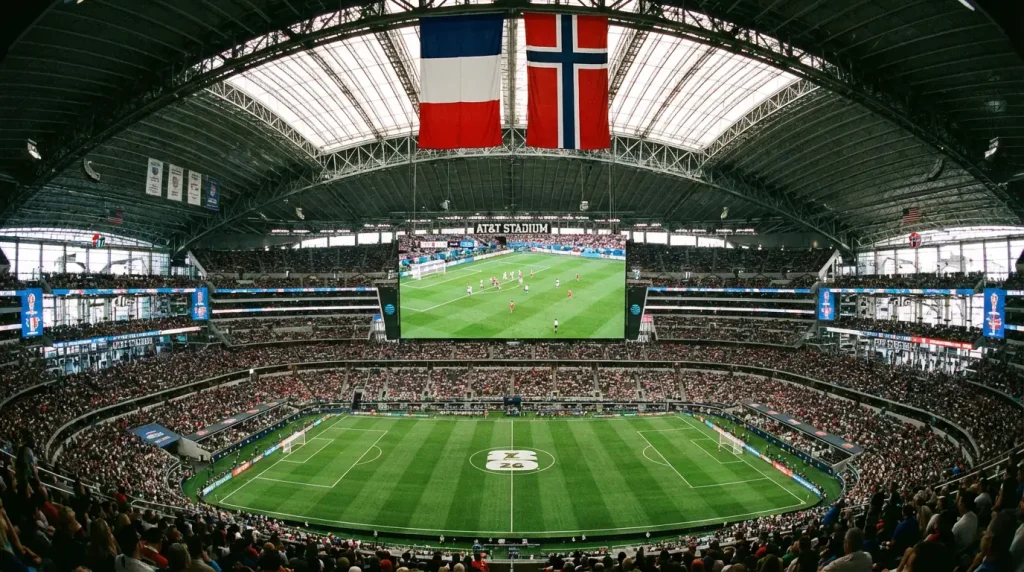
Table of Contents
One player transforms Group I from routine French procession into genuine drama — Erling Haaland arrives at his first World Cup with 63 international goals in 43 appearances, a strike rate that defies all historical comparison for a player of his age. Norway’s presence alongside France, Senegal, and Iraq creates a group where the favourite faces a singular attacking force capable of punishing any defensive lapse. France enter as two-time defending finalists searching for their third consecutive final appearance, carrying depth that no other nation can match. Senegal return as African champions with transition pace that troubled every opponent at AFCON 2023. Iraq qualify after a 40-year absence, bringing passionate support and underdog determination. For Australian punters analysing Group I, the Haaland variable demands attention — one player has rarely influenced betting markets as dramatically as the Manchester City striker will influence this quartet.
France: Squad Depth That Overwhelms the Competition
A recruitment firm once calculated that France’s national team pool contains more players at Europe’s elite clubs than any three other nations combined. The depth becomes almost absurd when you realise that Didier Deschamps could field two completely separate starting elevens, each capable of reaching a World Cup semi-final. This embarrassment of riches simultaneously drives French success and creates selection headaches that occasionally undermine tournament performances.
The attacking options alone illustrate the point. Kylian Mbappé enters as the world’s most expensive player following his Real Madrid transfer, with career statistics (0.78 goals per 90, 0.31 assists per 90) that rank among the greatest attackers in World Cup history. Behind him, Antoine Griezmann continues delivering elite creativity at 35, while Ousmane Dembélé, Randal Kolo Muani, Marcus Thuram, and Bradley Barcola provide rotation options that other nations would kill for as starters.
Defensively, France have stabilised around William Saliba and Ibrahima Konaté, a centre-back partnership combining pace, aerial dominance, and progressive passing. Saliba’s metrics from Arsenal’s Premier League campaigns — 86% aerial duel success, 2.4 interceptions per 90 — suggest a generational talent reaching full maturity. Theo Hernandez provides overlapping threat from left-back, while Jules Koundé offers tactical flexibility across the right side of defence.
The midfield question marks that plagued France at Euro 2024 remain somewhat unresolved. N’Golo Kanté’s decline from peak powers and Aurélien Tchouaméni’s defensive positioning have created debates about France’s optimal setup. Eduardo Camavinga provides dynamism, and Warren Zaïre-Emery has emerged as the next French midfield prospect, but the absence of a true Kanté replacement affects their pressing intensity — France averaged just 17.8 pressures per match in the attacking third at Euro 2024, down from 22.4 at their World Cup 2022 triumph.
Bookmakers price France at 1.25 to win Group I, implying 80% probability. This feels roughly correct, though the Norway fixture carrying Haaland threat and Senegal’s transition speed could create complications. Value exists in backing France’s opponents rather than taking compressed odds on the favourites.
Norway: Haaland’s Tournament Finally Arrives
Every generation produces a striker who redefines positional expectations, and Erling Haaland belongs in that conversation. His numbers transcend statistical norms — 63 goals in 43 international appearances, a ratio (1.47 per match) that no active player in a major league can approach. His Champions League and Premier League records shattered expectations upon arrival at Manchester City, and the World Cup represents the final frontier for individual validation.
Norway’s qualification journey revealed both Haaland’s centrality and the squad’s limitations. He scored 14 of their 26 qualifying goals — a 54% individual contribution that creates tactical predictability alongside lethal efficiency. When opponents successfully neutralised Haaland through double marking and restricted service, Norway struggled to create alternative attacking solutions. Their expected goals in matches where Haaland registered zero shots dropped to 0.7 per 90, suggesting complete dependency on their number nine.
Supporting cast improvements have arrived incrementally. Martin Ødegaard provides creative intelligence from deeper positions, with his progressive passing metrics (7.8 per 90 in the Premier League) suggesting he can find Haaland through congested defences. Sander Berge offers midfield physicality, while Alexander Sørloth provides an aerial secondary option. The emergence of Antonio Nusa at Real Betis adds dribbling threat that Norway have historically lacked.
Defensively, Norway’s concerns remain. They conceded 12 goals in 10 qualifying matches — a figure that ranked mid-table among European qualifiers despite facing relatively modest opposition. The centre-back partnership of Kristoffer Ajer and Leo Skiri Østigård lacks recovery pace against transitional attacks, and goalkeeper Ørjan Nyland has faced criticism for shot-stopping inconsistency.
At odds around 3.80 to qualify from Group I, Norway represent the group’s most interesting proposition. Their pathway requires taking points from France — achievable if Haaland produces individual brilliance — while handling Senegal and Iraq professionally. Current pricing implies 26% qualification probability, which I consider reasonable but potentially undervaluing Haaland’s tournament impact.
Senegal: AFCON Champions with Transition Threat
Africa’s reigning continental champions arrive with credentials that demand European respect. Senegal won AFCON 2022, reached World Cup knockout rounds in Qatar (losing on penalties to England), and defended their African title at AFCON 2023. This is not a tournament novice — Senegal represent Africa’s most consistent modern power with tactical sophistication that has evolved beyond pure athleticism.
The transition numbers jump off analytics pages. Senegal average 2.1 counter-attacking sequences per match that generate shot opportunities, ranking third among African nations in this metric. Ismaïla Sarr provides the acceleration that initiates these moves, with his top speed (36.1 km/h recorded in Premier League tracking data) creating space that more technical teammates exploit. Sadio Mané’s departure has necessitated tactical adjustment, but Nicolas Jackson’s emergence at Chelsea provides a capable replacement focal point.
Defensively, Kalidou Koulibaly’s experience anchors a backline that conceded just three goals across seven AFCON 2023 matches. His partnership with Abdou Diallo offers aerial dominance and organisational leadership, while Nampalys Mendy screens the defensive line with positioning that belies his lack of top-tier club football. Édouard Mendy’s goalkeeping provides elite shot-stopping when he maintains concentration.
Senegal’s World Cup history includes surprise runs (quarter-finals in 2002) and heartbreaking near-misses (the 2022 England penalty shootout). This generation has the personnel to compete with anyone on their day — but consistency against European opposition remains unproven over extended tournament formats.
Qualification odds around 2.40 (implied 42%) feel approximately correct. Senegal should beat Iraq comfortably, and their athletic profile creates problems for both France and Norway’s defensive structures. The question is whether they can sustain performance levels across three high-intensity matches within ten days.
Iraq: Forty Years of Waiting Ends in Group I
Iraq last appeared at a World Cup in 1986 — a 40-year absence that spans generations of footballers and political upheaval that devastated the nation’s sporting infrastructure. Their qualification through Asian pathways represents triumph over circumstances that would have destroyed lesser footballing cultures. The squad arriving in 2026 carries weight far beyond sporting competition.
The tactical approach under Jesús Casas prioritises defensive organisation and physical commitment. Iraq’s Asian qualification campaign showed resilience — they conceded just 0.7 goals per match against higher-ranked opponents while creating 1.2 expected goals through counter-attacking transitions. The 4-5-1 shape without possession condenses space effectively, though it limits attacking ambition against superior sides.
Individual quality exists in pockets. Mohanad Ali provides the goal threat, having scored consistently in AFC Champions League campaigns with Al-Shorta. His movement creates space for midfielders arriving late, though his conversion rate (0.38 goals per xG) suggests finishing inefficiency under pressure. Justin Meram, the former MLS winger, adds tactical flexibility and international football understanding that purely domestic-based players may lack.
Iraq’s realistic ceiling involves competitive performances without progression to knockout rounds. Their odds around 26.00 to qualify reflect this limited upside — they would need to beat Senegal and take points from either France or Norway, scenarios the data simply does not support. Better value exists in individual match markets where their defensive organisation can produce tighter margins than headline odds suggest.
Match Schedule and AEST Conversion
Group I fixtures take place across Central and Eastern time zones, creating varied viewing conditions for Australian punters:
| Date | Match | Venue | Local Time | AEST |
|---|---|---|---|---|
| Monday, 16 June | France vs Iraq | AT&T Stadium, Dallas | 19:00 CT | 10:00 Tuesday |
| Monday, 16 June | Senegal vs Norway | NRG Stadium, Houston | 13:00 CT | 04:00 Tuesday |
| Saturday, 21 June | France vs Senegal | MetLife Stadium, East Rutherford | 21:00 ET | 11:00 Sunday |
| Saturday, 21 June | Norway vs Iraq | Lincoln Financial Field, Philadelphia | 15:00 ET | 05:00 Sunday |
| Thursday, 26 June | Iraq vs Senegal | NRG Stadium, Houston | 17:00 CT | 08:00 Friday |
| Thursday, 26 June | Norway vs France | MetLife Stadium, East Rutherford | 17:00 ET | 07:00 Friday |
The marquee Norway vs France fixture on the final matchday kicks off at 07:00 AEST Friday — early but accessible for committed viewers. France vs Senegal at 11:00 AEST Sunday provides the most comfortable viewing slot for the group’s second-biggest match.
Group Qualification Odds Breakdown
Current market positioning across Australian bookmakers shows clear tiering:
| Team | To Win Group | To Qualify (Top 2) | To Finish Bottom |
|---|---|---|---|
| France | 1.25 | 1.05 | 41.00 |
| Senegal | 4.50 | 2.40 | 4.50 |
| Norway | 6.00 | 3.80 | 3.20 |
| Iraq | 26.00 | 15.00 | 1.40 |
France at 1.05 to qualify (implied 95%) prices appropriately — their depth and quality should secure advancement regardless of matchday results. The interesting battle is second place, where Senegal at 2.40 and Norway at 3.80 compete for the remaining automatic spot.
Norway’s pricing reflects market uncertainty about Haaland translating domestic dominance to tournament football. His lack of previous World Cup experience — he was injured for Qatar 2022 — creates unknown variables. Senegal’s tournament pedigree (AFCON titles, World Cup knockout experience) gives them an edge that pricing captures accurately.
Match-by-Match Betting Strategy
France vs Iraq (Matchday 1): France should control this comprehensively, but Iraq’s defensive organisation could limit damage. Expect possession dominance (70%+) from France with patient attacking build-up against compact opposition. France to win by exactly 2 goals at 3.40 represents solid value — Iraq’s quality means they might keep the score respectable while lacking attacking capability to trouble French defenders. Under 3.5 goals at 1.70 accounts for the controlled tempo France often employ against deep-lying opponents.
Senegal vs Norway (Matchday 1): The group’s most intriguing opener from a betting perspective. Senegal’s transition speed versus Haaland’s box presence creates genuine uncertainty. Norway historically struggle against athletic African opposition — their defensive vulnerabilities get exposed by pace. Senegal to win at 2.60 represents value, while over 2.5 goals at 2.05 captures the likely open, attacking nature of this contest. Both teams to score at 1.85 looks reliable given both sides’ attacking quality.
France vs Senegal (Matchday 2): The group decider for top spot unless France have already secured progression. Senegal’s counter-attacking threat will test France’s defensive transitions, but Mbappé’s individual brilliance should prove decisive. France to win at 1.60 lacks value at compressed odds; better to look at Senegal +1.5 Asian handicap at 1.80, backing them to keep the match competitive. Under 2.5 goals at 2.10 reflects the tactical respect both teams will show each other.
Norway vs Iraq (Matchday 2): Haaland should dominate against Iraq’s limited defensive resources. This fixture offers the most predictable scoreline in the group — Norway win with Haaland scoring, likely 2-0 or 3-0. Haaland anytime scorer at 1.35 provides minimal value; better to back Haaland to score 2+ at 2.40, which his volume suggests is achievable against modest opposition. Norway -2.5 Asian handicap at 2.30 appeals for confident punters.
Final Matchday (Matchday 3): Norway vs France shapes up as the decisive fixture for group positioning. If France have already qualified (likely), expect slight rotation that could benefit Norway. Haaland against a potentially rested French defence creates upset conditions — Norway to win at 5.50 represents bold but defensible speculation. Iraq vs Senegal should see comfortable Senegalese victory; Iraq’s accumulated fatigue from competing against superior opponents will show in their third match.
The Haaland Factor: Individual Impact on Market Dynamics
No single player influences betting markets quite like Erling Haaland. His presence in Group I creates distortions that punters must navigate carefully. Consider the data: Haaland’s 1.47 goals per international appearance exceeds even Messi’s peak international scoring rate (0.81). His expected goals per 90 (0.98 in the Premier League) suggests he receives chances at an unprecedented rate, and his conversion efficiency (27% shot-to-goal conversion) exceeds historical norms for elite strikers.
For Group I betting, this translates to several adjustments:
Norway’s match result odds are artificially compressed because Haaland can produce individual brilliance regardless of systemic weaknesses. Their true probability of beating Senegal hovers around 28-30%, but market sentiment influenced by Haaland’s name recognition pushes this toward 35%.
Goalscorer markets on Haaland offer little value at standard prices. Anytime scorer odds of 1.35-1.50 per match price his probability accurately given his volume. The value lies in two-goals-or-more markets (2.40-2.80 depending on opponent) where his scoring bursts create outsized returns.
Total goals markets shift upward in Norway matches. The over 2.5 line prices around 1.90-2.05 versus typical 2.20-2.30 for matches involving lower-ranked nations — the market correctly anticipates Haaland’s scoring volume while potentially underestimating opponents’ own attacking capabilities.
The Calculated Assessment
Group I divides into France versus the rest, with Senegal and Norway battling for second place while Iraq provide competitive but ultimately futile resistance. The betting value lies in the margins of this structure.
France to qualify at 1.05 offers security without returns. Accept this as near-certainty and focus attention on other markets where value exists.
Senegal to qualify at 2.40 represents my strongest conviction. Their tournament experience, transition pace, and African champions status suggest implied probability should sit closer to 50% rather than the 42% current odds reflect. The Senegal vs Norway opener likely determines second place — if Senegal win that fixture, they control their destiny.
Norway vs Senegal both teams to score at 1.85 provides the opening matchday’s best value play. Neither side defends with consistent discipline against quality opposition, and both possess individual attackers capable of producing moments. This fixture should produce goals from both ends.
For speculative positions, Norway to win Group I at 6.00 carries genuine upside. Beat Senegal on matchday one, handle Iraq comfortably, then face a potentially rotated France on matchday three — the scenario exists where Norway could top the group through Haaland heroics. Unlikely but not impossible, and 6.00 compensates appropriately for the risk.
Group I asks the eternal tournament question: can individual brilliance overcome systemic limitations? For Norway, the answer depends entirely on Haaland. For France, the question is whether their depth masks emerging cracks. For Senegal, it is whether African excellence translates to World Cup consistency. Iraq carry a nation’s hopes after 40 years of waiting. The data provides frameworks; the tournament provides drama.
