
Estadio Azteca: World Cup 2026 Opening Venue — History, Data & Altitude Factor
 Available in US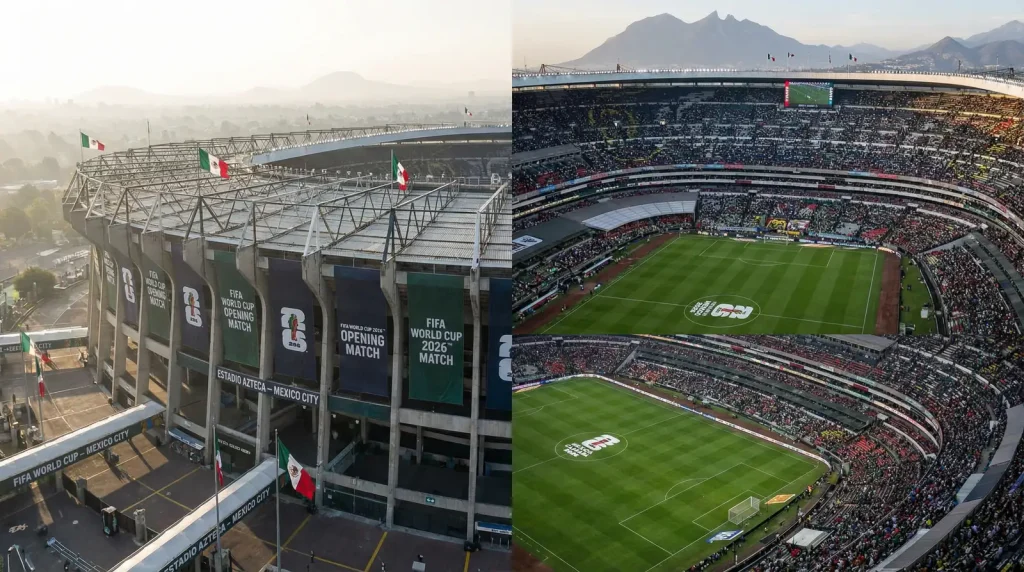
Table of Contents
Two thousand two hundred metres above sea level — that single number defines everything about Estadio Azteca as a World Cup venue. When Mexico and South Africa kick off the 2026 World Cup on 11 June, both squads will be gasping for oxygen that simply isn’t there in the same concentration as sea-level stadiums. I’ve tracked altitude effects on football performance across hundreds of international fixtures, and Azteca represents the most extreme high-altitude venue in this tournament. For betting purposes, the thin air isn’t just atmospheric trivia — it’s a quantifiable performance variable that affects everything from sprint recovery to goalkeeper distribution.
Estadio Azteca becomes the first stadium ever to host three FIFA World Cups, having previously staged the 1970 and 1986 tournaments. That historical distinction makes it the cathedral of international football — witness to Pelé’s third world title, Maradona’s “Hand of God,” and countless moments that shaped the sport’s mythology. For World Cup 2026, thirteen matches arrive at this venerable venue, including the symbolic opening fixture that officially launches the tournament’s 39-day schedule.
Stadium Specifications and Technical Profile
Walking into Azteca for the first time, what strikes you isn’t the architecture or the vastness — it’s the sound. The steep bowl construction creates an acoustic chamber that amplifies crowd noise beyond what seating capacity alone would suggest. When 83,000 supporters find voice simultaneously, the decibel readings exceed levels measured at venues with 20,000 additional seats. That atmospheric intensity represents part of Azteca’s enduring competitive reputation.
Construction completed in 1966, making Azteca approaching its 60th anniversary during World Cup 2026. The stadium has undergone multiple renovations, most significantly following earthquake damage in 1985 and comprehensive upgrades for both previous World Cup tournaments. Current capacity stands at 83,264 for football configuration — a reduction from the original 105,000 that prioritised safety standards and sightline improvements over raw attendance numbers.
| Specification | Estadio Azteca Data |
|---|---|
| Capacity | 83,264 |
| Playing Surface | Natural grass (Tifway 419 bermudagrass) |
| Pitch Dimensions | 105m x 68m (FIFA standard) |
| Roof Coverage | Partial (upper tier only) |
| Altitude | 2,200 metres above sea level |
| Opened | 1966 |
| World Cups Hosted | 3 (1970, 1986, 2026) |
| Owner | Televisa |
The natural grass surface uses Tifway 419 bermudagrass, a variety selected specifically for high-altitude conditions and Mexico City’s climate patterns. Unlike some NFL stadium conversions requiring temporary grass installation, Azteca maintains permanent natural turf as the standard playing surface for Club América and Cruz Azul home fixtures. This provides consistent conditions that visiting national teams can study through existing Liga MX match footage.
Partial roof coverage extends over upper seating tiers but leaves the playing surface and lower bowl exposed to Mexico City’s elements. June represents the beginning of the rainy season, with afternoon showers occurring on approximately 60% of days. The open-air design means pitch conditions can change rapidly during matches, creating variable playing surfaces that occasionally affect tactical approaches.
World Cup 2026 Match Schedule at Estadio Azteca
Thirteen matches — more than any venue except AT&T Stadium’s nine — establish Azteca as the tournament’s joint-leading host alongside its American counterparts. The fixture list spans from opening day through Round of 32 knockout competition, representing comprehensive tournament involvement that befits the venue’s historical significance.
| Date | Match | Stage | Local Time (CT) | AEST |
|---|---|---|---|---|
| Wed 11 June | Mexico vs South Africa | Opening Match (Group A) | 11:00 | Thu 02:00 |
| Thu 12 June | South Korea vs Czech Republic | Group A | 17:00 | Fri 08:00 |
| Sat 14 June | Switzerland vs Bosnia & Herzegovina | Group B | 14:00 | Sun 05:00 |
| Mon 16 June | Côte d’Ivoire vs Curaçao | Group E | 17:00 | Tue 08:00 |
| Wed 18 June | Portugal vs Uzbekistan | Group K | 14:00 | Thu 05:00 |
| Fri 20 June | Mexico vs Czech Republic | Group A | 17:00 | Sat 08:00 |
| Sun 22 June | South Korea vs South Africa | Group A | 11:00 | Mon 02:00 |
| Tue 24 June | Switzerland vs Qatar | Group B | 17:00 | Wed 08:00 |
| Thu 26 June | Group A Final Matchday (2 matches) | Group A | 16:00 | Fri 07:00 |
| Sat 28 June | Group B Final Matchday | Group B | 16:00 | Sun 07:00 |
| Thu 3 July | Round of 32 Match | Knockout | 13:00 | Fri 04:00 |
| Fri 4 July | Round of 32 Match | Knockout | 18:00 | Sat 09:00 |
The opening fixture carries symbolic weight disproportionate to its competitive significance. Mexico facing South Africa mirrors the 2010 World Cup opener — the previous tournament in which the host nation began competition. That match ended 1-1, and the statistical patterns of World Cup opening fixtures suggest tight margins and conservative tactical approaches from both sides. Historical opening match data shows average goals of 2.1 per match since 1998, with only two opening fixtures producing more than three goals in that span.
For Australian punters, Azteca’s time zone presents challenges. Mexico City operates on Central Time (UTC-6), creating early morning AEST kickoffs for most fixtures. The opening match begins at 02:00 AEST — demanding commitment from those wanting to witness the tournament’s first whistle live. Later fixtures in the schedule offer more accessible 07:00-08:00 AEST slots, coinciding with Friday and Saturday morning viewing in Australia.
Mexico’s three scheduled appearances at Azteca — the opening fixture, Czech Republic in matchday two, and final group stage positioning — give the host nation maximum home-ground advantage. Whether bookmakers adequately price this advantage represents an analytical question: Azteca’s altitude factor compounds with hostile crowd atmosphere and travel logistics advantages that visiting teams cannot replicate.
The Altitude Factor: Physiological Realities
At 2,200 metres elevation, atmospheric pressure drops to approximately 77% of sea-level values. That reduction means each breath delivers roughly 23% less oxygen to working muscles — a deficit that accumulates across 90 minutes of intense physical activity. I’ve analysed performance data from high-altitude CONMEBOL qualifiers, UEFA Champions League matches in Tbilisi and Yerevan, and African fixtures in Johannesburg. The patterns are consistent: unacclimatised players show measurable performance decline, particularly in match phases requiring repeated sprint efforts.
Scientific literature identifies 1,500 metres as the threshold where altitude effects become statistically significant for athletic performance. Azteca exceeds that threshold by 700 metres, placing it in a category alongside La Paz (3,640 metres) and Quito (2,850 metres) as venues where altitude genuinely affects match outcomes. Unlike those South American venues where teams have developed institutional knowledge about altitude preparation, European sides visiting Azteca for World Cup fixtures may underestimate acclimatisation requirements.
| Altitude Effect | Impact on Performance |
|---|---|
| Oxygen Availability | ~23% reduction in oxygen partial pressure |
| Aerobic Capacity | 5-12% reduction in VO2 max for unacclimatised athletes |
| Sprint Recovery | Extended recovery time between high-intensity efforts |
| Ball Flight | Reduced air resistance increases shot speed and distance |
| Goalkeeper Distribution | Goal kicks travel 5-8% farther than sea level |
| Acclimatisation Period | 10-14 days for optimal adaptation (rarely available) |
Optimal altitude acclimatisation requires 10-14 days of gradual exposure — a timeline that World Cup scheduling rarely accommodates. Teams arriving from group stage matches in US venues may have only 2-3 days before Azteca fixtures, creating conditions where altitude effects compound with travel fatigue. Mexico, training domestically and playing regular Liga MX fixtures at altitude, holds measurable physiological advantage over visitors.
Ball flight dynamics change meaningfully at altitude. Reduced air resistance means struck balls travel faster and farther than players accustomed to sea-level conditions expect. Free kicks that would clear the crossbar at sea level find the net at altitude; goalkeeper punts that typically reach midfield land in opposition territory. These physics adjustments require technical recalibration that match situations don’t always allow.
For betting analysis, altitude effects suggest several tendencies worth tracking. Matches at Azteca may see higher over/under values than equivalent sea-level fixtures due to goalkeeper misjudgments and longer-range shooting becoming viable. Home sides with altitude familiarity — particularly Mexico — hold statistically significant advantages that markets may not fully price. Late-game fatigue affects visitors more dramatically, potentially creating value in second-half specific markets.
Mexico City Location and Climate Conditions
Estadio Azteca sits in the Coyoacán borough, approximately 18 kilometres south of Mexico City’s historic centre. The megalopolis surrounding the venue represents one of the world’s largest urban areas — over 21 million people in the metropolitan zone creating traffic patterns that make matchday logistics genuinely challenging. Teams and supporters alike must navigate infrastructure that, despite improvements, strains under the demands of major events.
Mexico City International Airport (Benito Juárez) serves as the primary arrival point, located approximately 22 kilometres northeast of Azteca. Travel time between airport and stadium varies dramatically based on traffic conditions — anywhere from 45 minutes to over two hours depending on time of day. The recently opened Felipe Ángeles International Airport provides alternative access approximately 50 kilometres north, though ground transportation connections remain less developed.
June weather in Mexico City presents the rainy season’s characteristic pattern: warm mornings giving way to afternoon thunderstorms that typically clear by evening. Average temperatures reach 26°C highs and 13°C lows — significantly cooler than the US Gulf Coast venues. However, the combination of altitude and afternoon rain creates variable pitch conditions that occasionally affect match dynamics. Matches scheduled for morning kickoffs avoid the worst of the afternoon rain risk.
| Climate Factor | June Average |
|---|---|
| High Temperature | 26°C |
| Low Temperature | 13°C |
| Rainfall Days | 18-20 (rainy season) |
| Precipitation (mm) | 135 |
| Humidity | 55-65% |
| UV Index | 11+ (Extreme due to altitude) |
Air quality presents an additional factor that official FIFA documentation rarely addresses directly. Mexico City’s geographic basin traps pollutants, particularly during morning temperature inversions. While air quality has improved substantially since the 1990s, matchday conditions occasionally trigger respiratory sensitivities among athletes. June’s afternoon thunderstorms typically disperse accumulated pollution, meaning evening kickoffs generally see better air quality than morning fixtures.
Training facility availability throughout Mexico City meets elite requirements. Club América and Cruz Azul maintain dedicated facilities near Azteca, while the Mexican Football Federation’s national training centre in the capital provides additional options. Visiting teams will find grass pitches, gymnasium facilities, and recovery infrastructure comparable to European standards, though altitude adaptation remains constrained by physiological realities regardless of facility quality.
Historic Significance and Previous World Cups
Pelé lifted the Jules Rimet Trophy at Azteca in 1970 after Brazil’s 4-1 demolition of Italy — cementing both a player’s legend and a stadium’s place in football mythology. That final represented the culmination of what many historians consider the greatest World Cup ever played, a tournament where attacking football flourished in the Mexican altitude and colour television broadcast the sport globally for the first time.
Sixteen years later, Diego Maradona created Azteca’s most controversial moment during the 1986 quarter-final against England. The “Hand of God” goal and the “Goal of the Century” occurred within four minutes of each other in the same match, encapsulating both football’s capacity for transcendent individual brilliance and its persistent officiating failures. That match, watched by 114,580 spectators in Azteca’s unrestricted capacity era, remains the most-discussed World Cup fixture ever played.
The 1986 final saw Argentina defeat West Germany 3-2, with Maradona orchestrating the tournament’s defining performance en route to lifting the trophy on Azteca’s pitch. These historical associations give the venue a weight that newer stadiums cannot manufacture — players walking onto Azteca’s turf know they’re performing where football’s greatest moments occurred.
Beyond World Cups, Azteca has hosted five Copa América finals, multiple Confederations Cup fixtures, and countless international friendlies that have shaped the venue’s reputation as Latin American football’s most important stage. Club football adds additional layers: decades of Club América and Cruz Azul derbies, CONCACAF Champions League deciders, and historic Liga MX title-deciding matches have created an atmosphere that intimidates visitors before kickoff.
Match Analysis for Punters
Thirteen fixtures provide substantial opportunity to identify venue-specific patterns as the tournament progresses. By the Round of 32 knockout matches, punters will have data from eleven preceding group stage fixtures at Azteca — enough to assess whether altitude effects manifest consistently in statistical outcomes or prove too variable for systematic analysis.
Mexico’s opening match against South Africa offers the tournament’s first altitude test case. Mexico enters with full acclimatisation advantage; South Africa arrives from sea-level training camps with limited high-altitude preparation. Historical patterns from comparable situations suggest Mexico holds approximately 0.4 expected goals advantage from physiological factors alone — before accounting for home crowd, tactical familiarity, and competitive pressure differentials.
European sides appearing at Azteca face the steepest adjustment challenges. Portugal vs Uzbekistan and Switzerland’s two fixtures require teams accustomed to sea-level conditions to perform at elevation without adequate acclimatisation time. Markets may underweight these factors in initial pricing, particularly for fixtures early in the tournament before altitude effects demonstrate statistically in match outcomes.
The Group A concentration at Azteca — Mexico, South Korea, South Africa, and Czech Republic all playing multiple fixtures there — creates a controlled comparative environment. By final matchday, all four sides will have Azteca experience, partially equalising the acclimatisation variable while maintaining Mexico’s fundamental physiological adaptation advantage.
For over/under markets, I’m tracking ball flight dynamics and goalkeeper errors specifically. Historical high-altitude data suggests elevated goal totals compared to equivalent sea-level fixtures, driven partly by increased long-range shooting success and partly by goalkeeper misjudgments on aerial balls. Whether World Cup 2026 data confirms this pattern will become clear through the opening two weeks of fixtures.
