
Group J Data: Argentina, Algeria, Austria, Jordan — Odds and Predictions
 Available in US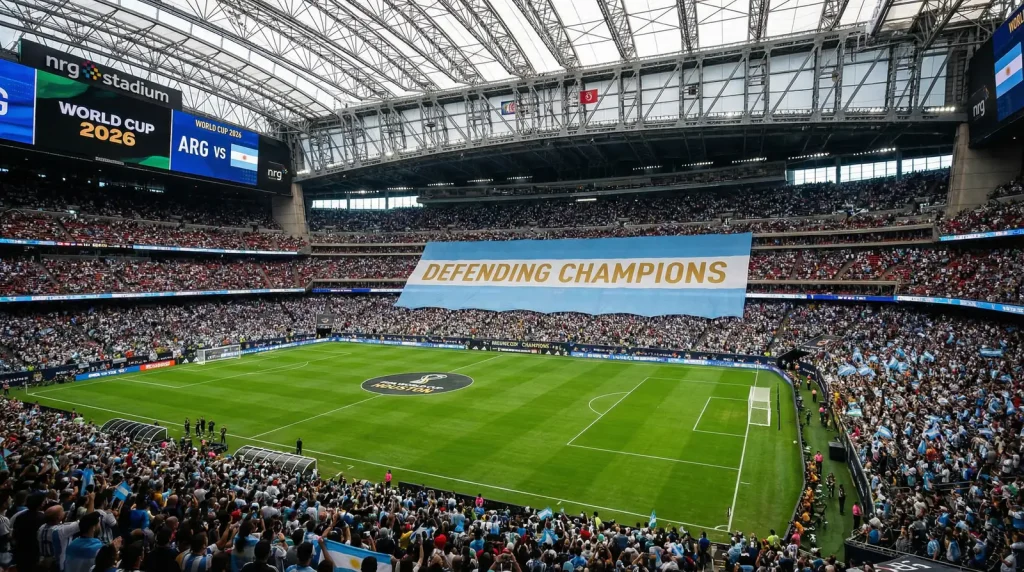
Table of Contents
Defending champions face the lightest resistance on paper — that is the immediate assessment when scanning Group J. Argentina arrive carrying the weight of history, attempting what only Brazil (1958-62) and Italy (1934-38) have achieved: back-to-back World Cup triumphs. Algeria bring continental pedigree without recent World Cup success. Austria return after missing Qatar 2022, hoping to exceed modest historical expectations. Jordan make their debut on football’s grandest stage after a remarkable Asian qualification campaign. The bookmakers have responded accordingly, pricing Argentina shorter than any other group favourite in the tournament. Yet historical data cautions against presumed certainties — Argentina themselves lost their 2022 opener to Saudi Arabia before ultimately lifting the trophy. Group J may lack elite opponents, but it presents traps that defending champions must navigate.
Argentina: The Weight of Defence and Mortality
Can they actually repeat? This question haunts every defending champion, and the historical answer provides sobering context. Since Italy’s consecutive triumphs in 1934 and 1938, seven defending champions have attempted to retain the title — all seven failed. Germany crashed out in the group stage in 2018. Spain fell to Netherlands in 2014. Italy did not even qualify in 2010. The defending champion curse exists in data, not just narrative.
Argentina’s case for defying history rests on squad construction and generational talent overlap. Lionel Messi, now 38 during the tournament, remains their heartbeat despite physical decline. His expected goal contribution (goals + assists adjusted for chance quality) has decreased from 1.12 per 90 in 2021-22 to 0.78 in 2025-26, yet he continues producing decisive moments when matches demand them. The supporting cast — Julián Álvarez, Lautaro Martínez, Enzo Fernández — has matured into world-class performers who can carry attacking burden when Messi conserves energy.
Defensively, Argentina have evolved since Qatar. Cristian Romero provides aggressive, ball-playing centre-back qualities that Lionel Scaloni deploys to maximum effect. Lisandro Martínez offers versatility across the backline. The full-back positions remain questions — Nicolás Tagliafico ages, while right-back options fluctuate based on club form — but organisationally, Argentina concede just 0.7 goals per match in competitive fixtures, a figure that ranks among the tournament’s elite.
The midfield engine of Fernández, Rodrigo De Paul, and Alexis Mac Allister provides balance between ball retention and vertical progression. Fernández’s progressive passing numbers (8.2 per 90 in the Premier League) drive creative sequences, while Mac Allister’s positioning intelligence creates numerical advantages in central zones. This midfield trio could prove the difference between title defence and early exit.
At 1.08 to win Group J, Argentina’s implied probability (93%) probably undersells their dominance given opponent quality. The value question is whether backing Argentina at these compressed prices makes mathematical sense when returns barely exceed the original stake.
Algeria: Fennec Foxes Return After 12-Year Absence
Algeria’s World Cup history includes one glorious chapter — Brazil 2014, where they reached the round of 16 and pushed Germany to extra time in a legendary knockout encounter. That squad featured talent that defined African football for a decade: Riyad Mahrez, Islam Slimani, and goalkeeper Raïs M’Bolhi all contributed to Algeria’s finest tournament performance. The 2026 squad lacks equivalent star power but brings organisational discipline developed through AFCON campaigns.
Under Djamel Belmadi, Algeria prioritise structure over individual brilliance. Their AFCON 2019 triumph demonstrated this philosophy — they won all seven matches while conceding just two goals, a defensive record that remains unmatched in continental tournament history. The transition to 2026 involves generational change, with several key performers from that period retiring or declining, but the principles persist.
Ismaël Bennacer provides the crucial link between defensive organisation and attacking progression. His role at AC Milan has evolved toward greater attacking responsibility, but for Algeria he drops deeper, controlling tempo and distributing accurately under pressure. Alongside him, Yacine Adli offers creative variety, while younger players like Amine Gouiri represent the attacking evolution Algeria have cultivated since their AFCON triumph.
Realistically, Algeria’s ceiling in Group J is second place, requiring them to beat both Austria and Jordan while accepting defeat to Argentina. Current odds around 4.50 to qualify (implied 22%) feel slightly generous given the squad’s limitations against European opposition. Better value exists in backing Algeria to beat Austria directly, where their tournament experience and defensive organisation should prove decisive.
Austria: Rangnick’s System Meets Limited Execution
Ralf Rangnick’s appointment transformed Austrian football’s tactical identity without necessarily improving their results against elite opposition. His pressing principles — aggressive counter-pressing triggers, high defensive lines, vertical progression — suit the Austrian player pool better than the possession-based systems previous coaches attempted. Yet the execution gap between theory and application remains visible against superior technical opponents.
Austria’s Euro 2024 campaign illustrated both potential and limitation. They defeated Poland and Netherlands in the group stage, demonstrating Rangnick’s system could produce results when intensity matched instruction. But France’s individual quality in the round of 16 exposed defensive transitions that Austrian personnel cannot correct. Mbappé’s movement created four clear chances in 35 minutes; France’s 1-0 victory flattered Austria.
David Alaba’s absence devastates Austrian prospects. The Real Madrid defender’s knee injury timeline remains uncertain, and his leadership alongside tactical versatility cannot be replicated by available alternatives. Without Alaba organising the backline, Austria’s high-line approach becomes riskier against opponents with pace — exactly the profile Algeria and Argentina possess.
Marko Arnautović provides veteran attacking presence, though his physical decline limits minutes and impact. Marcel Sabitzer remains Austria’s most consistent performer, driving possession from central midfield with passing metrics (85% completion, 4.3 progressive passes per 90) that anchor Rangnick’s system. The goalkeeper position has stabilised around Patrick Pentz, whose shot-stopping numbers have improved since his move to Bröndby.
At odds around 3.80 to qualify, Austria represent problematic value. Their best path requires finishing second above Algeria, achievable if their system produces results against African opposition unfamiliar with Rangnick’s methods. However, Algeria’s tournament experience suggests they will adapt more successfully than markets anticipate.
Jordan: Historic Debut Brings Asian Determination
Jordan’s qualification represents one of the 2026 World Cup’s defining narratives. A nation that had never previously reached the tournament defeated South Korea in Asian qualification’s decisive stages, producing perhaps the confederation’s most significant upset result. Hussein Ammouta’s tactical preparation created the foundations; Yazan Al-Naimat’s finishing instincts produced the moments. Jordan arrive without historical baggage but also without benchmark expectations.
The tactical approach mirrors Iraq’s from the same qualification pathway — defensive organisation, physical commitment, counter-attacking transitions when opportunities arise. Jordan’s 4-4-2 without possession compresses central space, forcing opponents wide where their athleticism can compete aerially. Against technically superior opposition, this approach limits damage without creating significant attacking threat.
Al-Naimat carries Jordan’s attacking burden almost entirely. His 9 goals in qualification represented 50% of Jordan’s total output, creating the same dependency dynamic that challenges other smaller nations. At 26, he enters his physical peak with experience across multiple Asian leagues, providing movement and finishing instincts that his teammates lack.
Jordan’s realistic objective involves competitive performances that honour their historic achievement. Group J offers the toughest possible draw given Argentina’s presence, but individual match results against Austria or even Algeria are not impossible. Their qualification odds around 41.00 reflect appropriate scepticism — they would need to beat both Austria and Algeria while hoping Argentina secure progression without requiring maximum points. The scenario exists but defies probability.
Match Schedule and Australian Viewing Times
Group J fixtures span Eastern and Central US time zones with varied AEST implications:
| Date | Match | Venue | Local Time | AEST |
|---|---|---|---|---|
| Monday, 16 June | Argentina vs Jordan | Hard Rock Stadium, Miami | 21:00 ET | 11:00 Tuesday |
| Monday, 16 June | Algeria vs Austria | Mercedes-Benz Stadium, Atlanta | 15:00 ET | 05:00 Tuesday |
| Saturday, 21 June | Argentina vs Algeria | MetLife Stadium, East Rutherford | 18:00 ET | 08:00 Sunday |
| Saturday, 21 June | Austria vs Jordan | Gillette Stadium, Foxborough | 12:00 ET | 02:00 Sunday |
| Thursday, 26 June | Jordan vs Algeria | Mercedes-Benz Stadium, Atlanta | 17:00 ET | 07:00 Friday |
| Thursday, 26 June | Austria vs Argentina | Hard Rock Stadium, Miami | 17:00 ET | 07:00 Friday |
Argentina’s opener against Jordan at 11:00 AEST Tuesday provides excellent viewing for Australian punters tracking the defending champions. The decisive matchday three fixtures both kick off at 07:00 AEST Friday — early but manageable for committed followers.
Qualification Odds and Market Structure
Current bookmaker consensus shows extreme favouritism in Group J:
| Team | To Win Group | To Qualify (Top 2) | To Finish Bottom |
|---|---|---|---|
| Argentina | 1.08 | 1.02 | 101.00 |
| Algeria | 7.00 | 4.50 | 3.00 |
| Austria | 8.00 | 3.80 | 3.50 |
| Jordan | 41.00 | 21.00 | 1.40 |
Argentina at 1.02 to qualify (implied 98%) represents the tournament’s shortest qualification price — appropriately so given opponent limitations. The entire betting narrative in Group J revolves around second place, where Algeria at 4.50 and Austria at 3.80 compete for the automatic spot.
Austria’s shorter price reflects European bias in markets rather than demonstrated superiority. Algeria’s AFCON pedigree and tournament experience suggest they deserve favourite status for second place, which current pricing does not reflect. This represents the group’s clearest value opportunity.
Match-by-Match Betting Analysis
Argentina vs Jordan (Matchday 1): Argentina should handle this professionally without requiring maximum intensity. Jordan’s defensive organisation will limit early damage, but class differential eventually tells. Argentina to win and under 3.5 goals at 2.30 captures the likely controlled victory — Jordan will frustrate before succumbing rather than collapse immediately. Messi to score anytime at 1.80 offers minimal value; better to back Julián Álvarez at 2.40, who often shoulders scoring burden when Messi operates deeper.
Algeria vs Austria (Matchday 1): The match that likely decides second place. Algeria’s tournament experience versus Rangnick’s systematic approach creates genuine tactical intrigue. Algeria’s ability to absorb pressure and transition quickly should trouble Austria’s high line. Algeria to win at 2.70 represents the standout value play in Group J — I assess their true probability closer to 40% than the implied 37%. Under 2.5 goals at 1.75 reflects both sides’ defensive tendencies against quality opposition.
Argentina vs Algeria (Matchday 2): Argentina should secure qualification with victory here. Algeria’s defensive organisation will make this tighter than the odds suggest, but Argentina’s individual quality creates inevitable separation. Argentina to win and under 3.5 goals at 2.00 provides reasonable value — Algeria will not collapse like weaker opponents might. Both teams to score at 2.60 offers speculative upside if Algeria find counter-attacking opportunities.
Austria vs Jordan (Matchday 2): Austria must win this to maintain qualification hopes. The 02:00 AEST kick-off limits Australian interest, but the match carries significance for second-place calculations. Austria to win and over 2.5 goals at 2.40 captures the expected scoreline as Austria push forward against limited opposition. Jordan to score at 2.80 represents value given Austria’s defensive vulnerabilities during transitions.
Final Matchday (Matchday 3): If Argentina have qualified (overwhelmingly likely), expect rotation against Austria that could create competitive margins. Austria to cover +2.5 Asian handicap at 1.80 reflects potential for a professional rather than emphatic Argentine victory. Jordan vs Algeria becomes crucial if Algeria have not already secured second place — Algeria to win at 1.65 should close their qualification pathway.
Defending Champions: Historical Context and Current Reality
Argentina’s title defence generates endless narrative speculation, but what does data actually suggest about their prospects? Historical patterns show defending champions face unique challenges beyond simple squad quality. The psychological burden of defending rather than chasing alters mentality. Physical fatigue from extended tournament runs accumulates over years. Opposition analytical preparation intensifies when facing known quantities.
Argentina’s specific vulnerabilities include Messi’s physical decline — his average sprint distance per match has decreased 18% since Qatar 2022 — and defensive ageing. Nicolás Otamendi turns 38 during the tournament; Tagliafico’s mobility has visibly declined. The defensive cover that protected Argentina’s transitional moments has thinned.
Counter-arguments centre on squad depth evolution. Fernández has become genuinely world-class since Qatar. Álvarez’s development at Manchester City provides alternative attacking leadership. Younger defenders like Lisandro Martínez and Cristian Romero have matured into elite performers. Argentina in 2026 may actually possess more balanced quality than their 2022 vintage, even accounting for Messi’s decline.
For punters, the defending champion question affects outright markets more than Group J calculations. Argentina should cruise through this group regardless of whether they ultimately retain the title. The interesting bets involve specific match outcomes where Argentine rotation or complacency might create unexpected margins.
Value Positioning and Strategic Assessment
Group J offers limited betting complexity given Argentina’s dominance, but value exists in correctly assessing the second-place battle.
Algeria to qualify at 4.50 represents my strongest conviction. Their AFCON pedigree, defensive organisation, and tournament-hardened mentality suggest they should handle Austria despite market scepticism. The Algeria vs Austria opener likely determines second place, and Algeria’s experience in high-pressure matches should prove decisive.
Algeria to beat Austria at 2.70 on matchday one provides the group’s clearest individual match value. Algeria have faced elimination pressure repeatedly in continental tournaments; Austria have not demonstrated equivalent composure against quality African opposition.
Argentina-related markets offer little value at compressed prices. Their match results, goal totals, and player props all price appropriately given the quality differential. The only speculative play involves Austria match on day three — if Argentina have already qualified, rotation could create competitive margins that Argentina -2.5 Asian handicap at 2.10 does not adequately price.
For adventure seekers, Jordan to beat Austria at 7.50 carries outside possibility. Jordan’s Asian qualification campaign proved they can produce results against expectations, and Austria’s defensive vulnerability against counter-attacks creates the conditions Jordan need. This is speculation, not conviction, but the returns compensate for the probability.
Group J asks whether defending champions can overcome historical patterns while simultaneously testing whether African or European approaches better suited to North American conditions. Argentina should answer the first question positively through superior quality. Algeria and Austria will determine the second through direct competition. Jordan write their own history simply by participating. The data points clearly toward Argentine dominance — the drama lies in the margins.
